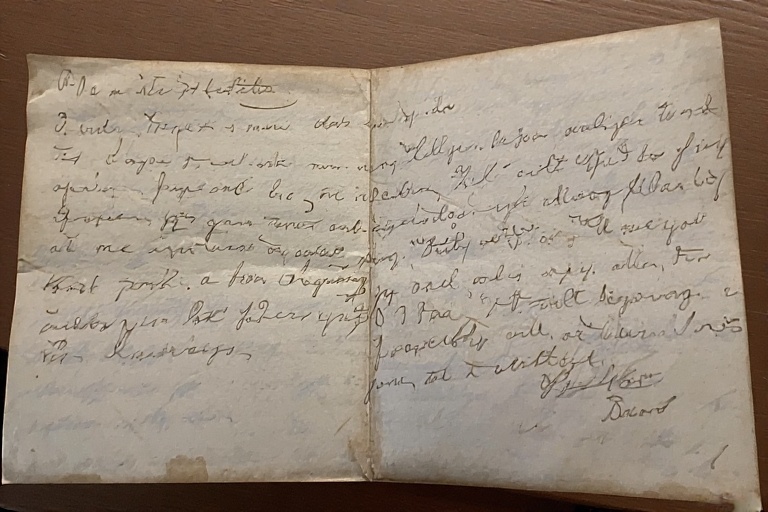
Among the many remarkable stories from the 1914 Christmas Truce, one anonymous letter stands out for its vivid, heartfelt account of peace in the middle of war. Though the writer’s name is lost to time, his words remain. They were discovered among old papers and auctioned at Bonhams in 2006, eventually sold for £14,000 to singer-songwriter Chris de Burgh. The letter paints a personal and deeply human picture of the most unlikely ceasefire in modern history.
A Glimpse into a Forgotten Moment
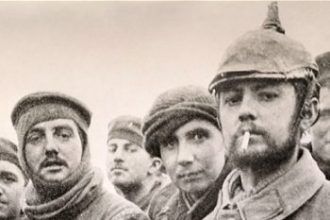
The Christmas Truce was a spontaneous pause in fighting during World War I, mostly along the Western Front. On Christmas Eve and Christmas Day, soldiers from both sides laid down their arms, crossed enemy lines, and shared songs, food, and even games of football. It wasn’t ordered by commanders. It happened because ordinary men, stuck in frozen trenches, wanted to find something human in a brutal war.
Letters from that time are rare. Some were saved by families, others lost. This particular letter has no name, no rank, no regiment clearly identified. Yet it gives us something valuable: the voice of a soldier who lived through that day and tried to explain it to someone back home.
“Quite a Social Party” — The Letter Speaks
Here are selected excerpts from the letter, with light edits for readability. The full text is longer, but this gives a clear sense of the writer’s experience:
“This will be the most memorable Christmas I’ve ever spent or likely to spend: since about tea time yesterday I don’t think there’s been a shot fired on either side up to now. Last night turned a very clear frost moonlight night, so soon after dusk we had some decent fires going and had a few carols and songs. The Germans commenced by placing lights all along the edge of their trenches and coming over to us — wishing us a Happy Christmas etc. They also gave us a few songs etc. so we had quite a social party.”
“Several of them can speak English very well so we had a few conversations. Some of our chaps went to over to their lines. I think they’ve all come back bar one from ‘E’ Co. They no doubt kept him as a souvenir.”
The soldier describes carol singing, fires lit under a frost-covered sky, and quiet talks with men who had, until recently, been trying to kill them. The contrast between everyday friendliness and the backdrop of war is striking.
Worship in a War Zone
Despite the eerie calm, duties continued. The letter mentions early morning fog and extended lookouts. But it also notes something more meaningful — a short service held nearby, and a church parade in the trench:
“A few of us that were lucky could go to Holy Communion early this morning. It was celebrated in a ruined farm about 500 yds behind us… About 10.30 we had a short church parade… held in the trench. How we did sing. ‘O Come All Ye Faithful’ and ‘While Shepherds Watched Their Flocks by Night’ were the hymns we had.”
In the middle of a battlefield, men found time to sing. Not as soldiers, but as human beings. The choice of hymns, both centered on peace and divine presence, reflects the emotional core of the truce. Worship became a way to feel connected to home, faith, and each other.
Football and Fried Bacon
One of the most famous aspects of the Christmas Truce was the reported football matches. While some accounts are vague or second-hand, this letter confirms that football was played — even if only in a small way:
“After breakfast we had a game of football at the back of our trenches!”
He then goes on to describe their Christmas dinner in detail. This is one of the warmest parts of the letter, full of food, laughter, and small surprises:
“Our dinner party started off with fried bacon and dip-bread: followed by hot Xmas pudding. I had a mascot in my piece. Next item on the menu was muscatels and almonds, oranges, bananas, chocolate etc followed by cocoa and smokes.”
He adds that just before the meal, he shook hands with several Germans, exchanged tokens — including a balaclava and uniform button — and agreed not to fire the next day. They even exchanged autographs. This wasn’t just a truce. It was a genuine connection, one soldier to another.
“We Can Hardly Believe It”
Throughout the letter, there’s a sense of disbelief. The writer knows how strange the day must sound to someone at home. He even suggests passing the letter around, since it would be too hard to explain it again and again:
“As I can’t explain to everyone how I spent my 25th — you might hand this round please.”
Later, he reflects on the surreal quality of the day:
“We can hardly believe that we’ve been firing at them for the last week or two — it all seems so strange.”
This line is especially powerful. It captures the emotional confusion of war. One day you’re aiming a rifle at someone, the next you’re sharing oranges. The writer doesn’t try to resolve that tension. He just shares it.
The Power of an Unknown Voice
We don’t know who this man was. His name, rank, and regiment were never recorded when the letter surfaced. But we do know how he felt that day. We know what he ate, what he sang, and how he shook hands with the enemy.
Sometimes, anonymity gives a story more weight. This soldier becomes every soldier. His voice could belong to any of the thousands who shared that day of peace. His words remind us that even in the darkest times, people look for light, warmth, and connection.
A Letter That Lives On
Since its discovery, the letter has become part of the wider memory of the Christmas Truce. That it sold for over 20 times its estimated value shows how much people value real human stories from war. Chris de Burgh, who bought the letter at auction, has spoken about its emotional power and the importance of keeping it safe.
Letters like this one serve a purpose beyond documentation. They allow us to imagine ourselves there. Not as generals or politicians, but as people — cold, hungry, unsure, and still choosing kindness over violence for one fleeting moment.
If you’re collecting stories for the Christmas Truce or writing about wartime letters, this anonymous account is one of the most moving examples available. It brings warmth, clarity, and even a touch of humor to a day often remembered in legend more than fact.
The soldier closed his letter simply, with a message to someone named George Boy and warm wishes to the neighbors. He thought of England all day. We think of him still.
Do you have letters or stories connected to the 1914 Christmas Truce? We’d love to hear from you. Every voice adds to the legacy of that extraordinary day.