What the Hertfordshire letters reveal
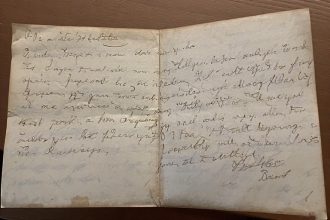
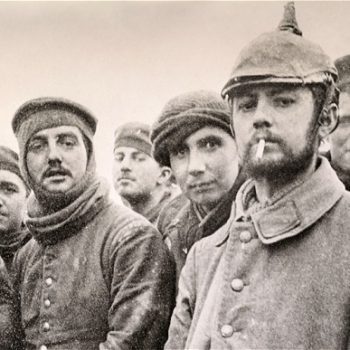
The Christmas Truce of 1914 is often remembered through stories of British and German soldiers meeting between the trenches, exchanging gifts and playing football. Letters published in Hertfordshire newspapers provide a more detailed and complicated picture.
Some local soldiers described quiet trenches, Christmas meals and messages sent home with pride and reassurance. Others witnessed meetings with German troops, the exchange of cigarettes and souvenirs, and the recovery and burial of men who had been killed before the truce began.
These accounts do not prove every popular detail associated with the Christmas Truce. They do, however, show that informal ceasefires and meetings between opposing troops took place in several locations along the Western Front.
The material discussed here comes mainly from letters written by soldiers serving at the front and published in the Hertfordshire Mercury, the Herts Advertiser and the St Albans Times. They offer a local perspective on an event that is often described through broad national stories.
Christmas Eve in the trenches
One of the local accounts came from a young private who had attended St Albans School and served in the 1st Hertfordshire Regiment. He had also been a member of the Officers’ Training Corps.
His company entered the front-line trenches on Christmas Eve and remained there through Christmas Day and Boxing Day. The men had expected an attack, but the front was relatively quiet during the holiday period.
His letter combined confidence with an awareness of the danger around him. He wrote that snipers were active, but believed that the British heavy guns were superior and that the trenches were strongly built. He also reassured readers that the St Albans old boys serving with him were safe and well.
His comments show how soldiers often balanced danger with reassurance when writing to people at home. A letter could describe life at the front, but it also had to reassure relatives that the writer remained safe and hopeful.
How soldiers described Christmas Day
Four other local men serving with the Hertfordshire Regiment sent similar accounts to friends and relatives. Their letters were patriotic and philosophical, although the calm tone may partly reflect military censorship.
One soldier wrote that he had “the pleasure of being in the trenches on Christmas Day”. He also reported that two men had been killed that day. One was Lance-Sergeant T. E. Gregory from Watford, while the other was Private Percy Huggins.
The letters placed the British and German trenches between roughly 600 and 200 yards apart, although men killed in the fighting were said to have been only about 20 yards from the enemy position.
Despite the danger, several soldiers described the front as unusually quiet over Christmas. One St Albans man wrote that the Germans had not troubled them much, although an attack took place on the British right shortly before midnight on New Year’s Eve.
What did soldiers eat at Christmas?
The letters also described the soldiers’ Christmas food. Breakfast consisted of bread, jam, cheese and a small piece of cold bacon. Dinner included cold meat, vegetables and plum pudding supplied through the Daily News Fund.
Food was important in these accounts because it provided a brief connection with ordinary Christmas life. Even a modest meal could feel significant when eaten in a wet, exposed trench far from home.
Several soldiers also mentioned a Christmas card from King George V and Queen Mary. One described it as “our greatest pleasure of all” and said that the card wished the troops a happy Christmas and a safe return.
One soldier sent the card home and asked his family to keep it until he returned. For many servicemen, such objects became personal reminders of home and hopes for survival.
A London Rifle Brigade account
A longer and more vivid account came from a former Hertford soldier serving with the London Rifle Brigade. He wrote to his mother in Welwyn on Boxing Day.
He described hearing singing and shouting from nearby German trenches on Christmas Eve. The news soon spread that British and German officers had exchanged compliments and agreed to a temporary truce.
According to his account, men sang songs from both sides of the line. After his unit had been relieved, he heard a German band playing “Old Folks at Home”, “God Save the King” and “Onward, Christian Soldiers”.
On Christmas Day, British and German soldiers met in no-man’s land. They exchanged cigarettes and souvenirs, and some men entered the opposing trenches.
“On Christmas Day men and officers went in between, and even entered each other’s trenches and exchanged smokes and souvenirs.”
The soldier also wrote that one regiment had attempted to arrange a football match, although he did not believe that it had taken place. This is an important detail because it shows how reports of football were already circulating among soldiers, even when the writer had not personally witnessed a match.
The human cost behind the truce
The same letter makes clear that the Christmas Truce did not erase the reality of the war. The soldier described waterlogged trenches, flooded dug-outs, freezing clothes and men being killed only hours before the ceasefire.
He also joined a party sent to recover a wounded soldier who had been shot shortly before the truce. The temporary pause in firing made it possible for men to cross the open ground more safely than would normally have been possible.
The truce also allowed both sides to recover and bury some of their dead. The soldier described helping to dig a grave and attending a short funeral service.
This is one of the most important aspects of the surviving accounts. The truce was not simply a cheerful interruption involving songs and cigarettes. It also created a brief opportunity to deal with the dead and wounded left between the lines.
The account of Rifleman C. H. Brazier
A particularly vivid letter was sent to a family in Bishop’s Stortford by Rifleman C. H. Brazier of the Queen’s Westminsters.
He wrote that German soldiers began calling across the trenches on Christmas Eve, asking for cigarettes and pudding and offering Christmas greetings. Two British soldiers climbed over the parapet and walked towards the German position. They were met by German soldiers who promised not to fire on Christmas Day if the British did the same.
The men exchanged cigars, wine, cake and cigarettes. Brazier later joined other British soldiers in meeting a larger group of Germans. He described them as friendly and said that some spoke English.
The two sides sang carols during the night. One German soldier played “God Save the King” on a mouth organ. On Christmas Day, soldiers walked around together, talked and exchanged newspapers.
Brazier also described men exploring ruined houses behind the trenches. They found bicycles, top hats, umbrellas and other objects. Some of the soldiers dressed in the clothing and amused the Germans by riding the bicycles backwards.
The scene was extraordinary because the same area had recently been a battlefield and could become one again as soon as the ceasefire ended.
Did British and German soldiers really play football?
The famous football story needs careful treatment. There is strong evidence that the Christmas Truce took place and that soldiers met, exchanged gifts, sang, talked and helped recover the dead.
There is also evidence that football was played in some places during the wider period of Christmas truces. Soldiers sometimes used an ordinary ball, while improvised objects such as food tins or other materials could be kicked around.
What remains uncertain is the popular image of one large, organised match between British and German teams in no-man’s land. Many accounts were based on hearsay, and some were published long after the event.
The Hertfordshire letters do not prove that a formal football match took place in the locations described. One soldier had heard that a match was being arranged, but said that he did not think it came off. Another account describes friendly activity, costumes and bicycles, but not a football match.
The safest conclusion is that informal football was probably played at some locations, but the familiar story of a single official match should not be presented as established fact.
Christmas for troops training in Hertfordshire
The Christmas Truce affected men at the front, but thousands of other servicemen spent Christmas 1914 training in Britain before being sent overseas.
In Hatfield, young men from the 17th and 20th Battalions of the London Regiment spent Christmas with a unit from the Royal Army Medical Corps. They were likely experiencing their first Christmas away from home, with little idea of what awaited them in the coming months.
No Christmas leave was granted, so local residents organised food and entertainment for the troops. The soldiers attended church services before spending the day at the Public Hall on the Great North Road.
The menu was far more generous than the food described in the trench letters. Breakfast included pork sausages, bread, butter, jam and tea. Dinner included roast turkey, goose, chicken, pheasant, roast pork, potatoes, cabbage, sprouts and turnips, followed by plum pudding with brandy sauce.
Beer and mineral waters were provided, followed by an afternoon tea of bread, butter, mince pies, iced cake, buns, celery and jam.
In the evening, the troops attended a concert featuring songs, recitations and monologues. The programme ended with the National Anthem.
The festive atmosphere did not last long. On Boxing Day, the London Regiment marched to St Albans to practise entraining at the City Station before leaving the district the following week.
What happened after Christmas?
The Christmas Truce was temporary and local. It did not end the First World War, and it did not occur everywhere along the Western Front. In some areas, fighting continued throughout the holiday period.
Military commanders on both sides were concerned that fraternisation could weaken discipline. As the war continued, troops were discouraged from repeating the informal meetings that had taken place in December 1914.
For the men involved, however, the truce created a brief moment when the enemy became visible as another group of human beings rather than an abstract target.
The Hertfordshire letters show both sides of that experience. They describe Christmas meals, royal cards, songs and conversations, but also snipers, flooded trenches, dead comrades and the fear of returning to the front.
Did the Christmas Truce really happen?
Yes. Historians have strong evidence from letters, diaries, photographs and military records that informal truces occurred in several parts of the Western Front during Christmas 1914.
The exact events varied from one sector to another. Not every soldier took part, and there was no single truce covering the entire front.
Did soldiers really play football?
There is evidence of football and informal kickabouts in some locations, but the famous story of one large, organised British-German match remains disputed. Some reports were second-hand or later retellings.
How long did the Christmas Truce last?
The duration varied. Some pauses began on Christmas Eve and continued into Christmas Day, while others lasted longer or ended sooner. The truce was local and informal rather than a single officially agreed ceasefire.
Why did the Christmas Truce end?
Fighting resumed because the opposing armies remained at war and the temporary agreements had not changed military orders or wider strategy. Commanders also took steps to discourage further fraternisation.
The letters from Hertfordshire soldiers do not present the Christmas Truce as a simple legend. They show a short pause in a brutal war, during which men exchanged food, cigarettes, songs and memories before returning to the conditions that had brought them together as enemies.